
Author: Callie Friedman
Originally Published: July 13, 2026
ESTIMATED READING TIME: 2 MINUTES
Dolphinariums confine dolphins in unnatural conditions to perform tricks for our entertainment. This blog shares 7 reasons why tourists should avoid visiting dolphinariums.
Many tourists see dolphinariums as an exciting experience to get an up close viewing of these unique marine mammals that roam our oceans, yet they are unaware of how their visit may support cruelty. However, awareness is increasing as countries around the world are joining the effort to make a difference. Efforts to phase out cetacean display for entertainment or ban it outright have occurred in Bolivia, Canada, Chile, Costa Rica, Croatia, Cyprus, France, Greece, Hungary, India, Kazakhstan, Nicaragua, Slovenia, and Switzerland.
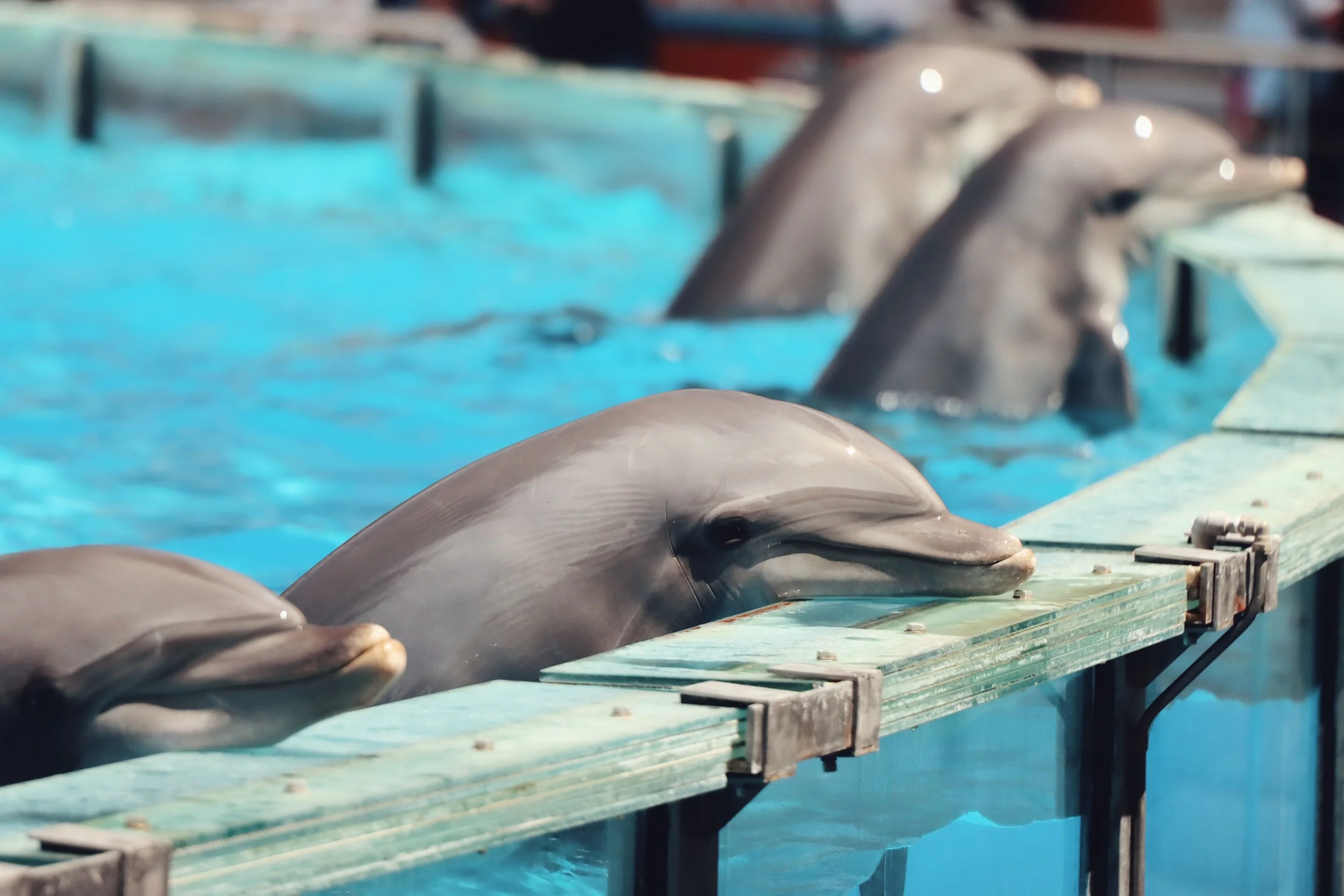
Here are 7 reasons why you should avoid dolphinariums on your next trip:
Dolphins are highly intelligent creatures that have their own social connections, language, dialect, and traditions. When confined in these enclosures, mental health issues arise, presented in stress-induced behaviors and extreme anxiety that can lead to aggression toward one another as well as visitors.
The majority of captive dolphins are not endangered and the captive breeding that occurs is done for entertainment purposes rather than conservation efforts.
Wild dolphins swim up to 60 miles daily, yet in dolphinariums they are often contained in tanks that are 200,000 times smaller than their habitat in the wild.
Dolphins in captivity are often food deprived to use hunger as a reward. Additionally, their diets are typically lacking proper nutrients which can cause health problems.
Wild dolphins live in social groups their entire lives hunting, raising young, and playing together. Those in captivity are restricted from this lifestyle because their confinement induces aggression, limiting the interactions they can have with other dolphins.
Many tricks performed by dolphins can be hazardous to their health such as beaching and pushing/pulling humans with their nose.
Dolphins who live in captive settings are not able to avoid noise, chemical, and physical pollution that are often present in a closed environment.
Next time you book a wildlife experience, make sure to do your research and support ethical organizations that prioritize the well-being and conservation of the complex creatures that make our world the incredible place it is. Avoid the dolphinariums and instead explore observation experiences that allow animals to roam in their natural habitat.
References:
Animal Welfare Institute. (n.d.). Capture and Trade. https://awionline.org/programs/marine-wildlife/captive-marine-mammals/capture-and-trade/#/504/
Grove, R. (2023, July 27). The dark side of dolphinariums: 5 alarming facts you should know. World Animal Protection. https://www.worldanimalprotection.org.uk/latest/blogs/dark-side-of-dolphinariums/
Nature Foundation Sint Maarten. (2020, June 24). The Nature Foundation St. Maarten Explains the Negative Effects of Marine Mammal Captivity and Dolphinariums. https://naturefoundationsxm.org/the-nature-foundation-st-maarten-explains-the-negative-effects-of-marine-mammal-captivity-and-dolphinariums/
One Voice. (n.d.). Dolphinariums. https://one-voice.fr/en/our-fights/dolphinariums/
